






















On July 20, 1969, almost 6 decades ago, Americans landed on the moon during the Apollo mission, a mission dedicated to winning the “space race” and the Cold War against the Soviets.
The whole Artemis mission is dedicated to building a lunar space station so we can study the moon. This mission will be the very first part of getting to Mars. The first Artemis mission (Artemis l) was dedicated to test the lunar system.
“Canada, I am thinking of you, and I am hoping that all of you see your greatness reflected in this journey around the moon. I am just so proud of all of you,” Jeremy Hansen, an Artemis II astronaut said.
This is the second step on the moon and it’s going to be done by four people. This is a big step in all of mankind and a big leap of faith trying to build a lunar station. This is the overall first step in almost six decades of starting a mission to the moon.
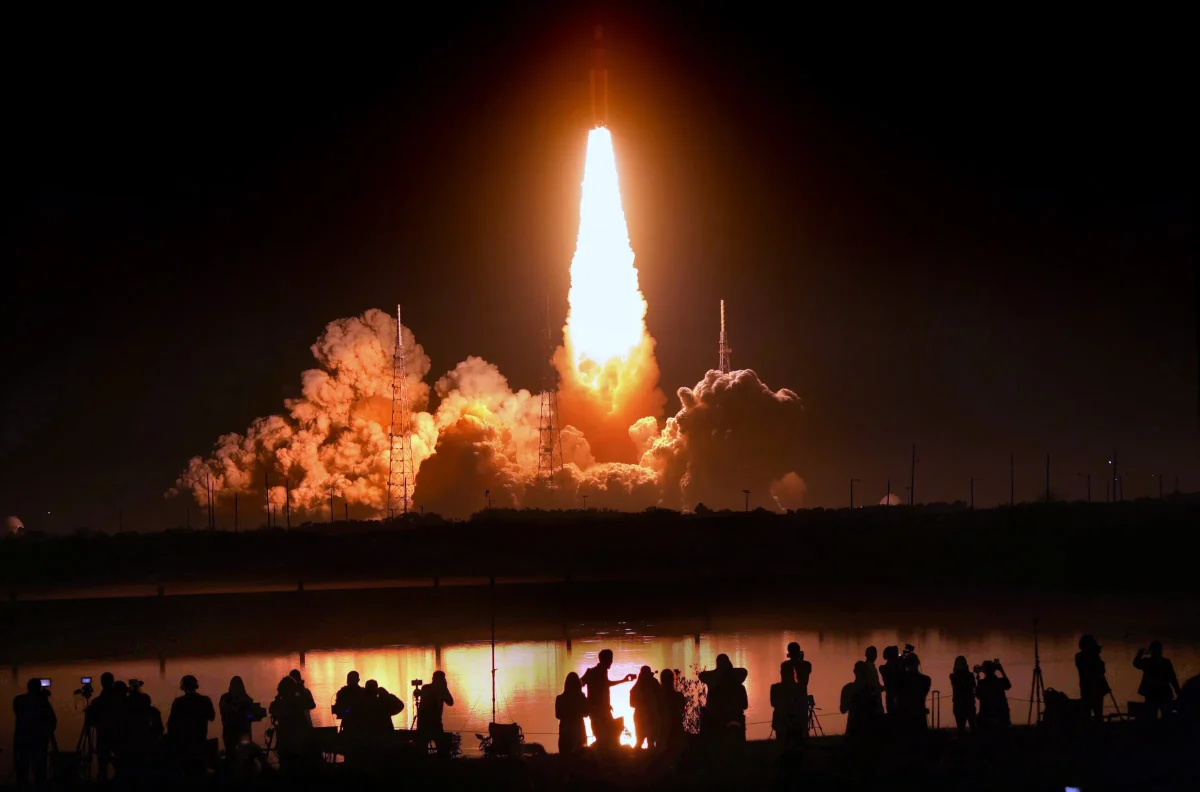
Back in 2022, on November 16 at 6:35, NASA launched Artemis I into space to test the Space Launch System (SLS). This was the first mission on the Artemis mission. This mission consisted of an uncrewed ship (no one was on the ship because the ship was for testing) that orbited the lunar system tracking data and information about the moon and SLS.
“It’s a bright spot on the moon, and we would like to call it Carroll,” said Hanson.
The crew commemorated a milestone day on their moon journey by naming a previously unnamed crater in memory of Carroll Wiseman, the wife of the mission commander, who died in 2020.
The crew in the launch mission Artemis ll consists of Commander Reid Wiseman (NASA), Pilot Victor Glover (NASA), and Mission Specialists Christina Koch (NASA), and Jeremy Hansen (Canadian Space Agency).