


















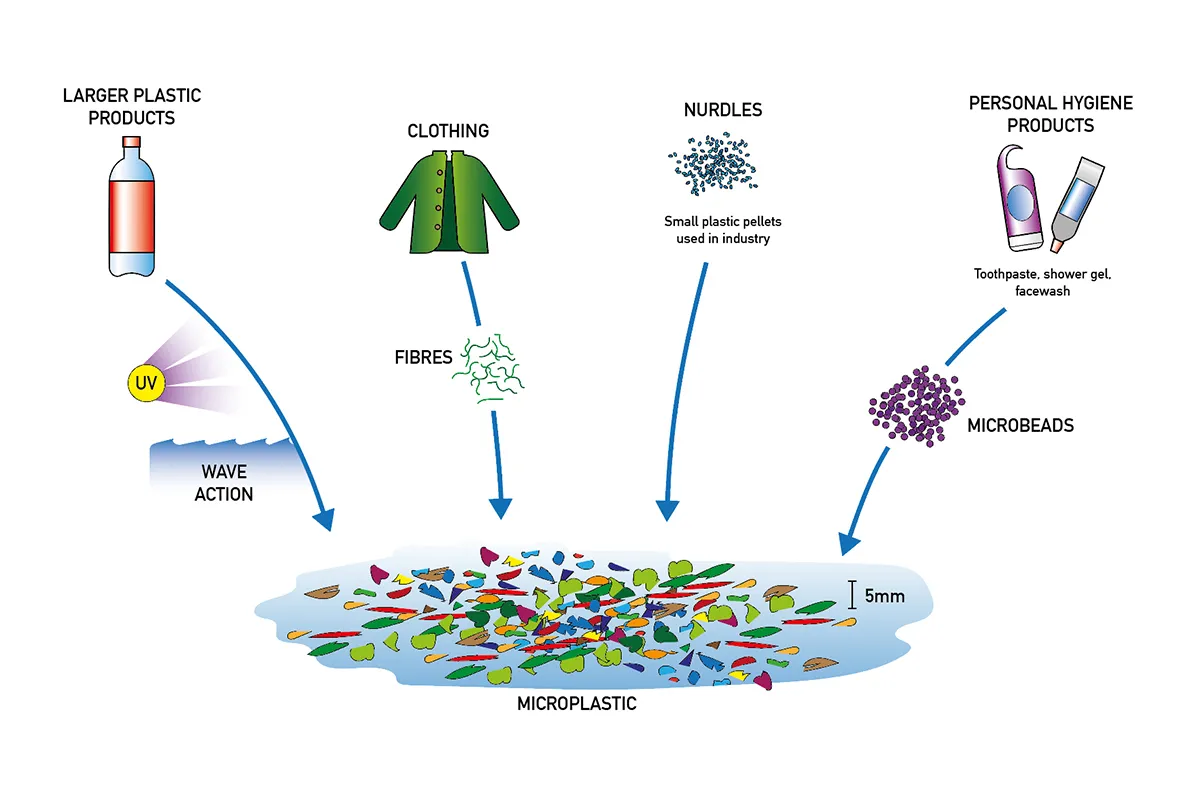
Microplastics are a severe global pollution threat to our environment. They can be found in oceans, rivers, lakes, drinking water, food, human bodies, and personal care products like toothpaste. Microplastics are causing indigestion by wildlife, chemical toxicity, ecosystem disruption, and potential human health impacts.
Tiny plastic particles are easily mistaken for food by many animals like fish, birds, and other animals. This can block the digestive tract, cause malnutrition, and introduce toxic chemicals into an animal’s body.
Plastic contains many chemicals like phthalates, BPA, that can leach out. Microplastics also act like sponges for other pollutants in the water, concentrating them and delivering them into organisms that ingest the toxic particles.
Microplastics settle in sediments, soil structure, reduce the ability of filter-feeders to function, and interfere with natural nutrient cycling. In oceans, they even affect the ability of microscopic plants.
Microplastics have been found in human blood, lungs, placenta, and breast milk. The long-term effects are still being studied, but early research links them to inflammation, oxidative stress, and possible endocrine disruption.
Microplastics are bad because they never break down, spread everywhere, poison wildlife, and climb the food chain into our bodies. Once they’re up there, cleanup is nearly impossible.