



















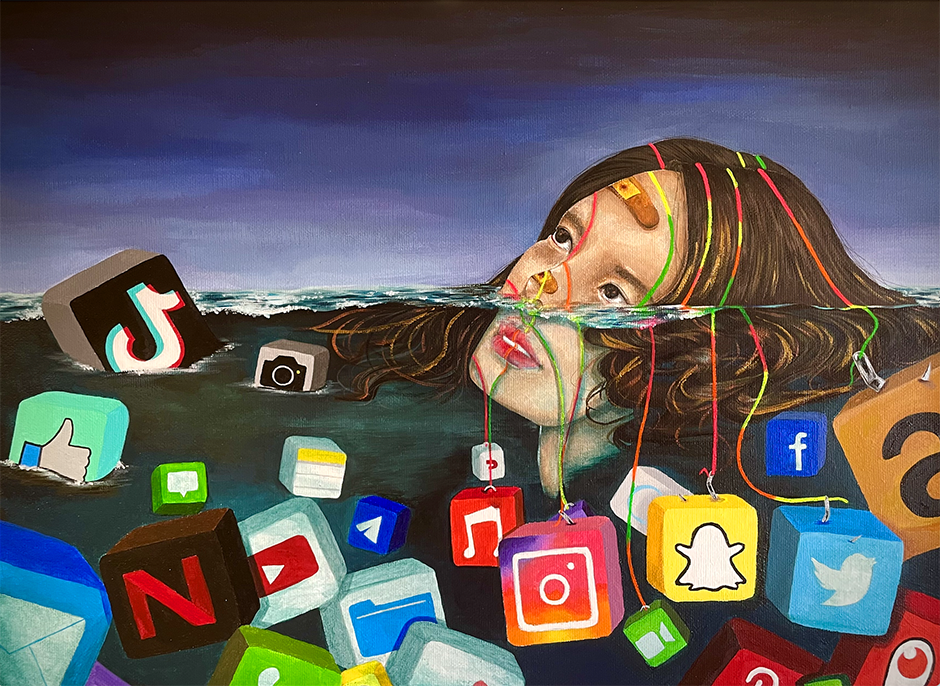




Over the past decade, social media platforms such as Snapchat, Instagram, and TikTok have become widespread. Evidence increasingly points to their negative effects on young adults, with associations to weakened mental and emotional health. Studies by John Hopkins Medicine, Stanford Law School, and Yale School of Medicine reveal growing risks of anxiety, depression, and disruption of brain chemical growth from social media use.
To start, on September 25th, 2024, author Carol Vidal and Jennifer Margaret Katzenstein came out with a study for teens that demonstrated the rise of anxiety due to technology platforms. They stated, “According to the advisory, evidence suggests that social media has the potential to harm the mental health of children and adolescents. The advisory indicates that frequent social media use may be associated with changes in brain regions involved in emotion and learning. Additionally, it can affect impulse control, social behavior, emotional regulation, and sensitivity to social punishments and rewards.”
This example illustrates how Vidal and Katzenstein’s study emphasizes the risks of children as young as 10 using social media platforms. As children spend up to 5 hours a day on technology, patterns of comparison and anxiety emerge. Comparison culture and exposure to idealized versions of others are causing low self-esteem.
To add on to this, an article by Stanford Law School shows the rise of suicide in depression among individuals. The article states, “Moreover, in the United States, the 12-month prevalence of major depressive episodes among adolescents increased from 8.7% in 2005 to 11.3% in 2014 (Mojtabai et al., 2016). The new media screen activities have been suggested as one of the causes of the increase in adolescent depression and suicide (Twenge et al., 2017).
As various studies show that screens are causing depressive episodes, we cannot continue to ignore this. Psychology continues to tell people that excessive scrolling on phones is causing major attention deficits due to the 15-second videos and increased aggression/ depression.
For my last piece of research, an article by the Yale School of Medicine shows how children are experiencing interrupted mental growth due to social media. For example they state, “The report stresses that the brain is going through a highly sensitive period between the ages of 10 and 19, when identities and feelings of self-worth are forming. According to the report, “frequent social media use may be associated with distinct changes in the developing brain,” potentially affecting such functions as emotional learning and behavior, impulse control, and emotional regulation.”
As adolescents minds continue to develop, we cannot expose them to mindless scrolling. If teens are always influenced by technology, they will never understand the importance of learning, communicating with others, and growing up without fast entertainment.
To conclude, as a society, we need to take a stand against the influence of technology on children. Even the positives of technology, such as being able to communicate with friends and having a “support system,” do not outweigh the negative effects of technology. The increase of anxiety, depression, and disruption of brain chemical growth is a clear demonstration that we need to do what Australia did and ban social media for youth under 16. As Albert Einstein said it best, “It has become appallingly obvious that our technology has exceeded our humanity.”